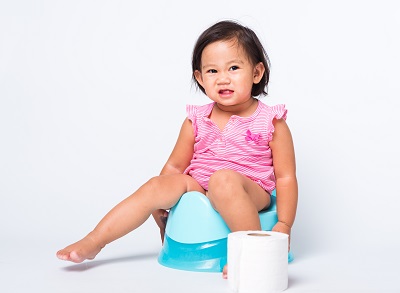
Many parents who read our site Potty Training and Bedwetting Solutions ask us the same issues on a regular basis. Here are some of the most common problems experienced during toilet training, as well as some solutions:
You don't know what words to use. Your child should be able to understand the phrases "pee," "poop," "dry," "wet," "clean," "messy," and "potty." Teach your child these terminology and use them on a regular basis throughout the potty training phase.
You've Got No Idea How to Inspire a Child.
Praise your child for his or her cooperation or success. All contributions and sacrifices should be recognized. "You're sitting on the toilet precisely like Mommy," for example, or "You're really trying to get the urine in the potty." You may give your child a prize for urinating in the toilet. While some young people are satisfied with a sense of accomplishment, others want incentives to remain involved. Compliments and hugs, as well as raisins, pop tarts, fruit slices, cookies, or stickers Large awards (such as excursions to the candy store or ice cream parlor) should be kept for when your child goes to the toilet on her own and uses it, or wants to go someplace with both of you and then uses it. Continue to commend your child for staying dry and using the toilet on a regular basis.
Your youngster is unaware of the urge to urinate. This is very normal. Some children need months to recover complete bladder control. If you experience bedwetting, this might take a lot longer.
There isn't a restroom nearby.
Your child should understand that before a long journey, they should try to use a toilet to relieve themselves, even if they don't have a strong need at the moment. In many cases, a toilet will be inaccessible or too far away when a bathroom is really needed, therefore teach your child to pee outdoors. This might come in handy in other circumstances. It is not recommended that your child retain urine when learning to toilet train. Small boys are unaffected by this, but very young females must learn to squat so that their feet and clothing do not get in the way. You may help your daughter by modeling the appropriate posture and physically supporting her as she squats.
Your child makes an attempt to play with feces. This is just a product of my inquisitiveness. Be kind but strong, and communicate with your child by saying, "That's not something you want to play with."
Your Youngster Refuses to Sit Down to Urinate. The majority of boys will opt to sit when learning to toilet train. When he has mastered bladder control and learnt to pee while sitting, connect with him by reminding him that he is a big boy and can go potty when standing up. He could discover it on his own or while watching his father or other male friends or family members use the lavatory.
Your Child Is a Resilient Person I need to use the restroom. When there is resistance, it usually means that it is not the right moment to start toilet training. If your kid is above the age of five and you sense he has to urinate or digest, take him to the toilet. Keeping your child on the toilet for a few minutes every hour and explaining with your child how you want things to happen, why, and how. Use a casual, easygoing tone of voice. Don't pursue the matter if he complains passionately.
Your Girl Is Having Misfortunes.
During the early phases of toilet training, accidents are common. Most children have accidents, and bedwetting is common even at the age of six to eight months. Remember to keep your calm after an accident, to treat them gently, and to avoid being furious. Punishment and scolding often make youngsters feel terrible, making potty training more difficult and instilling feelings in your child that he or she cannot control at this age.
Your youngster feels distressed when stools are flushed away. Some children believe that their feces is a normal part of their body. A child is likely to feel afraid at this period. It's a challenging notion for them to understand. Discuss with your child the role of bodily waste and the body's need to release it in the toilet. Try having your youngster say "good bye poop" in a pleasant tone of voice while flushing and calming down. Alternatively, they might wave farewell to their own excrement with their hands. This might transform a bad mood into a positive one and make for a pleasant game.
A child's bowel movement or urination happens shortly after being taken from the toilet. This happens early on in the potty training process. It will take time for your child to learn to relax the muscles that control his or her bowel and bladder. If this happens often, it might mean that your child is not yet ready for toilet training. Please again in a few weeks.
When a bowel movement is imminent, your kid asks for a diaper and hides or stands in a certain spot. Your child may be able to postpone urinating or having a bowel movement for a brief amount of time. They may walk out and hide, returning wet or dirty, or they may wake up dry after naps. This indicates physical readiness but not emotional readiness for toilet training. This is not an indication of a toilet training failure; rather, it signifies that your child understands bowel signals. Think positively and continue to suggest that he or she have a bowel movement in the bathroom on the toilet.
Urination Training for Bedwetting Solutions can take a little longer if you are bedwetting during naps and at night. Encourage your child to use the restroom before going to bed and immediately after waking up. Inform your child that if they need to use the restroom in the middle of the night, they may call for you or wake you up to help them in going to the restroom at night or during nap time.
Going to the Bathroom with a Specific Individual.
This is rather typical in most youngsters. If your child would only go potty with you, ease yourself out of the situation gradually. You may offer to wait with your child and help them undress, or you could accompany your child to the lavatory. However, wait outside the door and look in and out of the bathroom to let your child know you're around if they need anything.
Diapers are being made available again. Anything that causes a child stress may encourage him or her to regress to a previous level of toilet training progress, particularly if the change is recent. Sickness, a new baby, or relocating to a new region may all generate stress. Stress in your child's life is now considered normal in the vast majority of children. What bothers one child may not bother another. Stress reduction may be as simple as changing one's daily routine.
Begin toilet training your youngster just when he or she is plainly ready. Readiness does not happen by chance; it is the outcome of concepts and skills that you may start teaching your child.